Prof. Dr. Nicholas Müller
Social Informatics and the Social Aspects of Digitalization
nicholas.mueller@thws.de
Short Biography
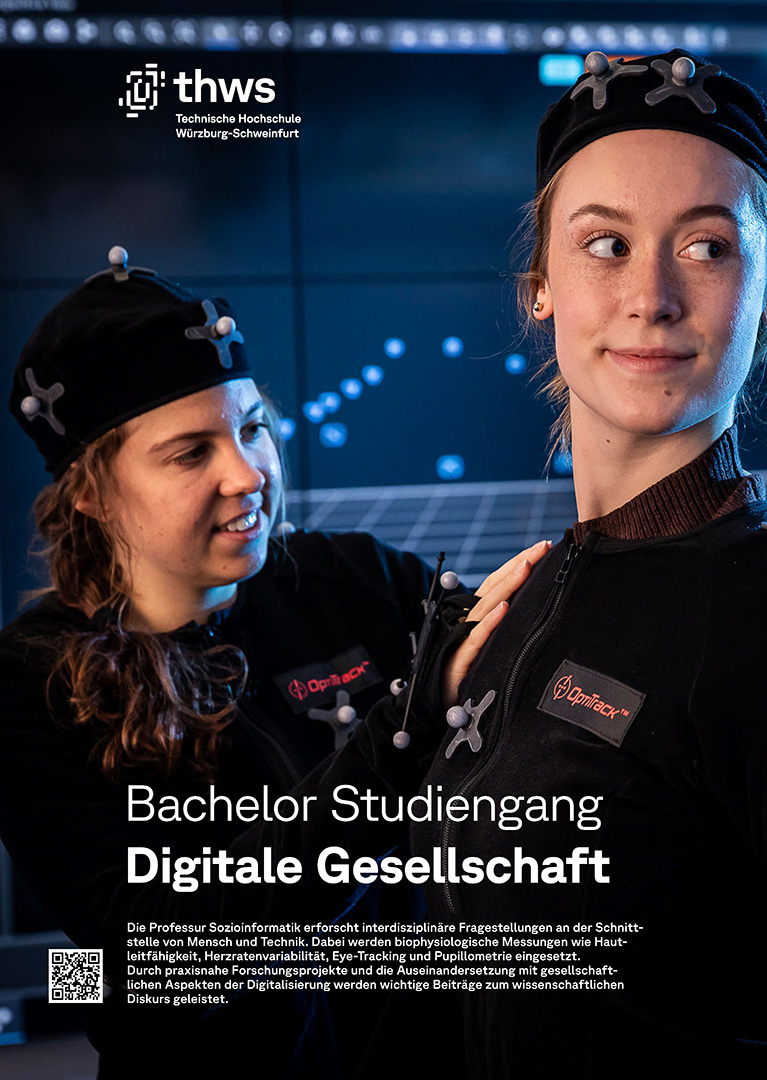
Nicholas Müller conducts research on new methods and approaches for analyzing and implementing optimal digitalization strategies in economic and social contexts. He is a research professor of socioinformatics and the social aspects of digitalization at THWS and heads the Institute for Design and Information Systems (IDIS). As an interfaculty professor, he works at the intersection of computer science, design, and applied social sciences. He also directs the interdisciplinary degree program in Digital Society.
His research projects include innovative developments that offer technological solutions to societal challenges, such as:
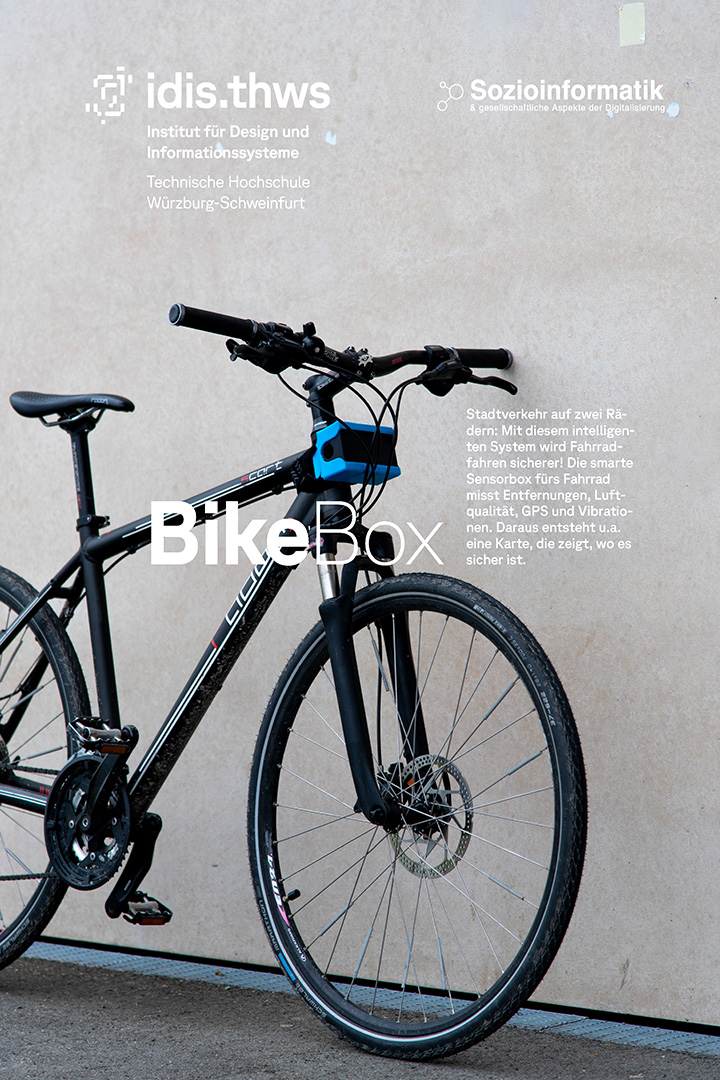
- The BikeBox for improving bicycle traffic safety
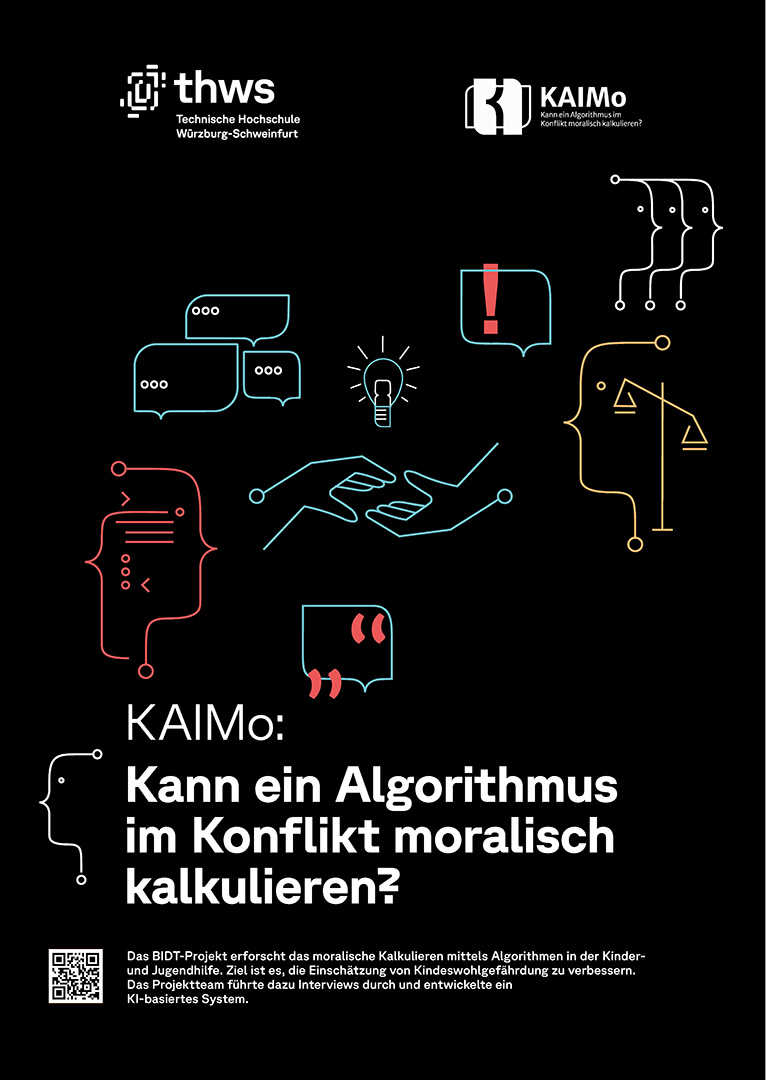
- The KAIMO project to support child welfare agencies in cases where a child’s well-being is at risk
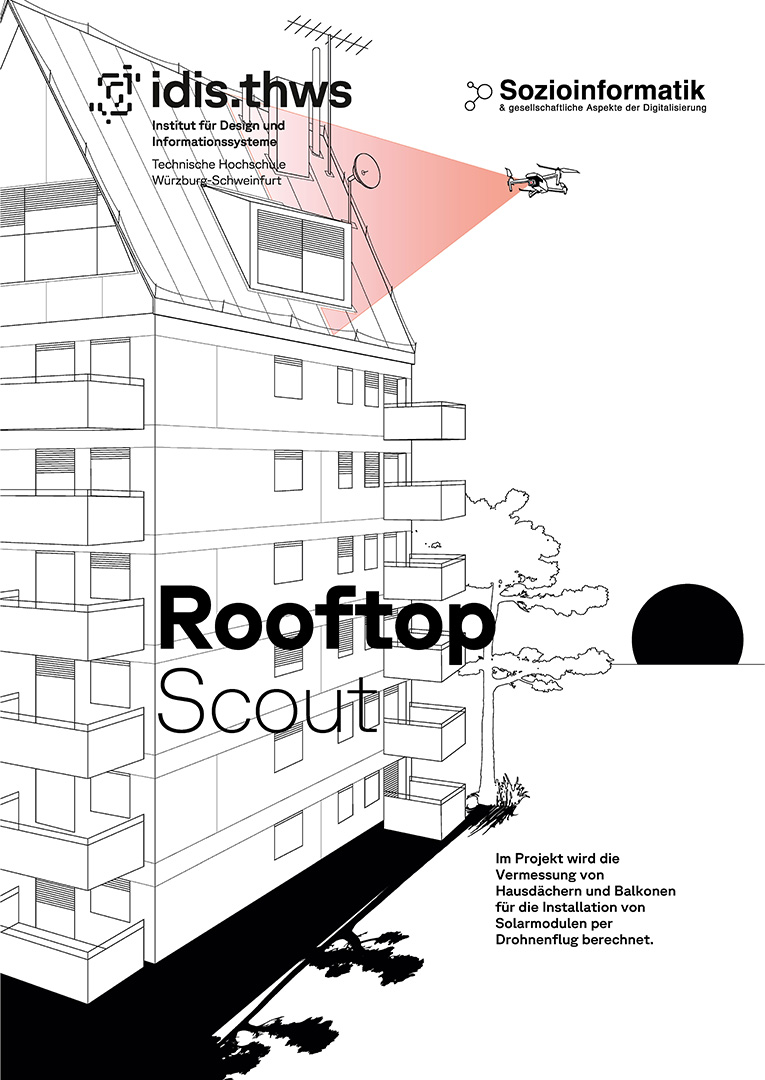
- The Rooftop Scout for accurately surveying roofs and surfaces for the installation of solar panels
- The development of modern UI/UX systems for digital services
Previously, he studied media communication, earned his Ph.D. at the Chair of E-Learning and New Media, worked at Accenture, and subsequently completed his habilitation in the field of media psychology. His dissertation focuses on the perception and empirical measurement of suspense in cliffhangers within serial narrative formats.
Latest news
New BMBF Research Project – BikeBox
Cyclists are often hindered by cars parked too close, vehicles passing too closely, and bumpy roads. Together with our partner Webfactor, we are developing a sensor box for bicycles that measures distances to the sides, air quality, GPS, and vibrations. By distributing 100 of these boxes to students next summer semester, we will create a map that empirically identifies dangerous areas in a city—so that urban planning changes aimed at improving cycling safety can be based on evaluated data.
New BMBF Research Project – Rooftop Scout
The overarching goal of the Rooftop Scout project is to optimize the efficiency and precision of roof surveying for the installation of solar systems and, through the development and application of innovative drone technology and the testing of various measurement techniques, to create a comprehensive solution that not only enables the surveying of roofs but also provides a solid foundation for the planning and implementation of solar projects.
The “Digital Society” Degree Program
Our new inter-faculty degree program from FIW, FG, and FAS! This fall marks the start of the second cohort of our new bachelor’s degree program, “Digital Society”!
More information:
fiw.thws.de/studienangebot/bachelor-digitale-gesellschaft/
As well as:
Activities
- Program Director, “Digital Society”
- Member of the Doctoral Committee at the THWS NiSys Doctoral Center
- Member of the BIDT Doctoral Commission
- Member of the BayWiss Digitalization Steering Committee
- Chair of the Special Track “Security and Privacy Aspects of Human-Computer Interactions” at HICSS
- Program Board Member of the 11th International Conference on Learning and Collaboration Technologies (LCT) hosted by HCII
- Program Committee Member for ACHI
Research Focus Areas
- Physiological Measurement Methods
- Sensor Technology in the Context of Bicycle Safety
- Drones for Measuring Objects
- Media Psychology
- Accessibility
Research activities
Can an Algorithm Make Moral Calculations (KAIMO) — Ethics and Digital Operationalization in the Field of Child Welfare Risks.
Norms and values guide human behavior. In modern societies, social and political institutions are also expected to meet these normative criteria. In light of advancing digital capabilities, the question arises as to whether institutional decision-making can be digitally supported—or even replaced—by software programs. This is all the more relevant in social conflicts and morally charged situations, where people must make ethically and legally sound decisions quickly and with limited resources. Can algorithms help public institutions act ethically, particularly in such conflict situations?
Escape-Game: Ritterkapelle Haßfurt
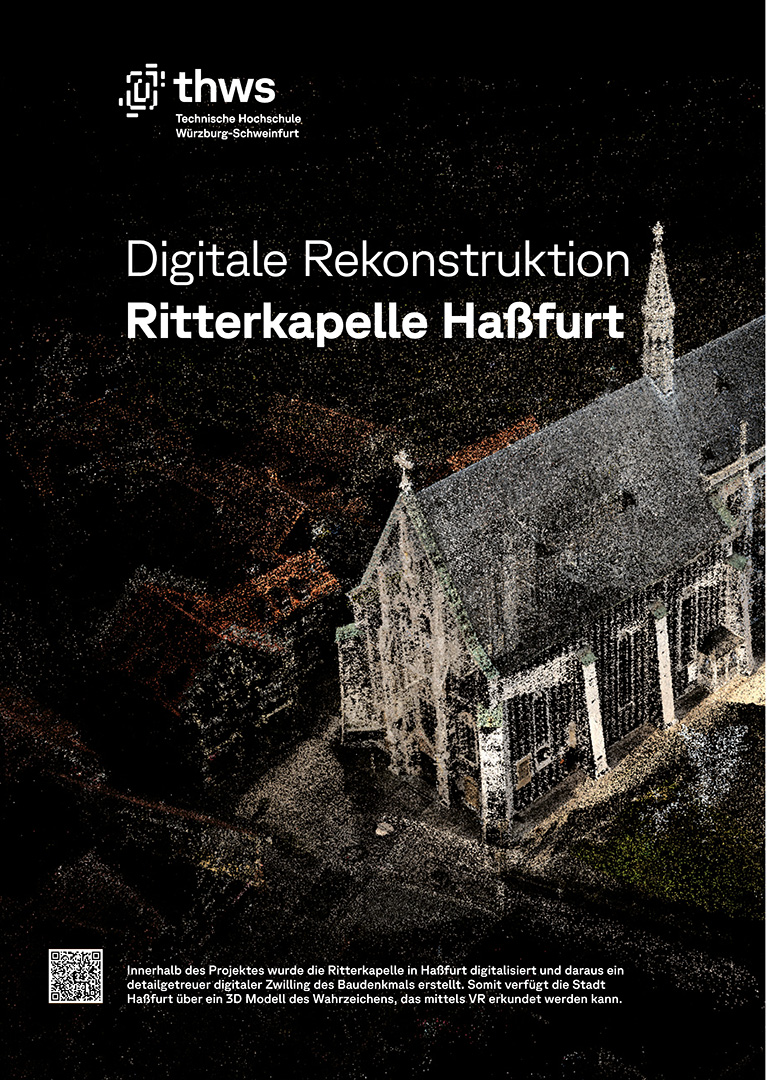
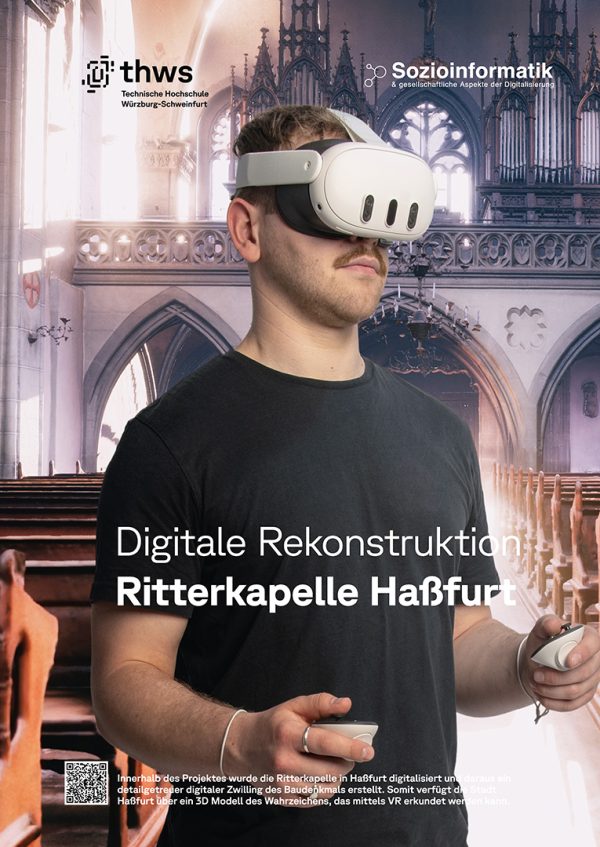
The highly detailed 3D model of the historic Haßfurt Knights’ Chapel, developed as part of a project in collaboration with the City of Haßfurt’s Smart Green City Initiative, enables the design of a teaching and learning environment for virtual reality through photogrammetric reconstruction. Thanks to the very high-resolution models and surface textures, it is possible to freely switch between low-detail applications and high-detail use cases. In the first version, the historic church can be viewed from the inside and outside using standard VR devices, smartphones, or desktop applications—a method already employed in other contexts for building conservation. For a closer look at sculptures or architectural structures, however, the higher-resolution data can be utilized. In this context, the intention is to convey knowledge about the historical background of the Knights’ Chapel, the specific works of art on display, and the distinctive features of its construction. Since a 3D model of the entire chapel already exists and the current pandemic has significantly restricted visiting hours, implementing a solution that allows for virtual tours is a logical step. This initiative can serve as a model for other art-historical and cultural organizations, and the technology can also be applied in museums or other historic buildings.
User-Centered Design
Digital civic services enable citizens to communicate with public administration at any time and from any location. To this end, the Institute for Design and Information Systems (IDIS) at FHWS is collaborating with the Bavarian Municipal Data Processing Agency (AKDB).
CO2 in the Context of Individual Mobility
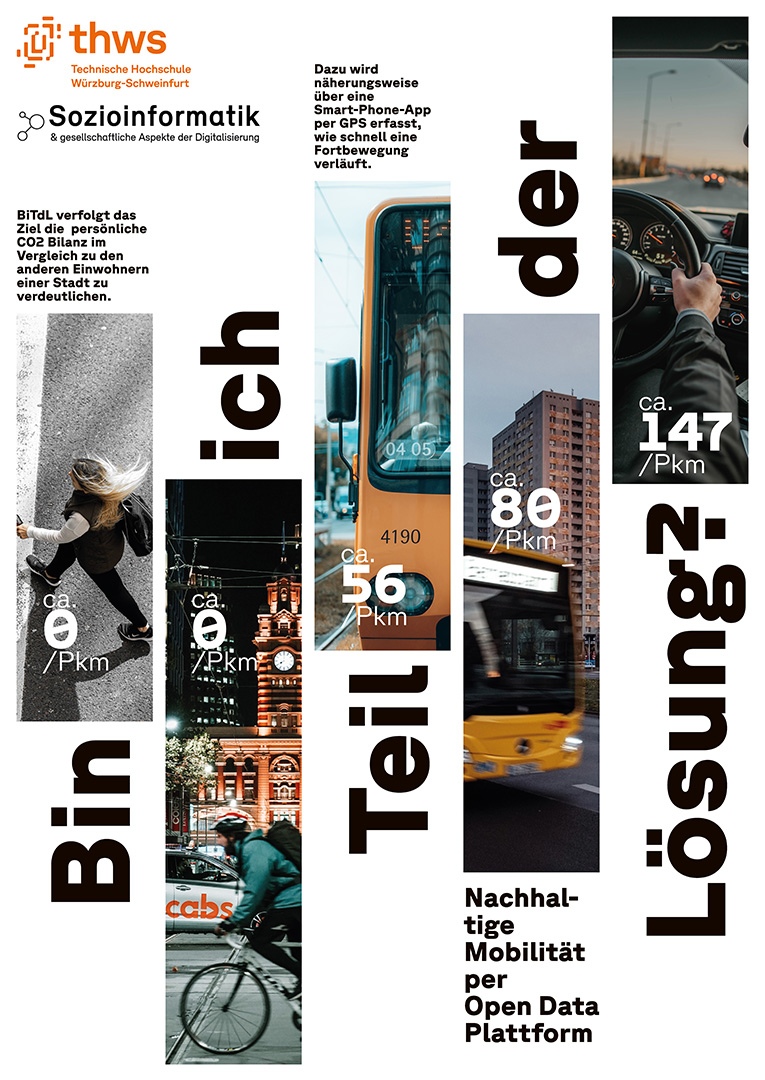
A mobile AI app helps reduce CO2 emissions. Using GPS and other sensors, it tracks users’ movements to determine the mode of transportation they use (e.g., walking, public transit, bicycle, car). Based on this data and by cross-referencing it with CO2 consumption tables, a daily mobility score is calculated. This score is compared to the average consumption of all users to determine the extent to which an individual’s mobility behavior contributes to climate action.
AR Stumbling Stones
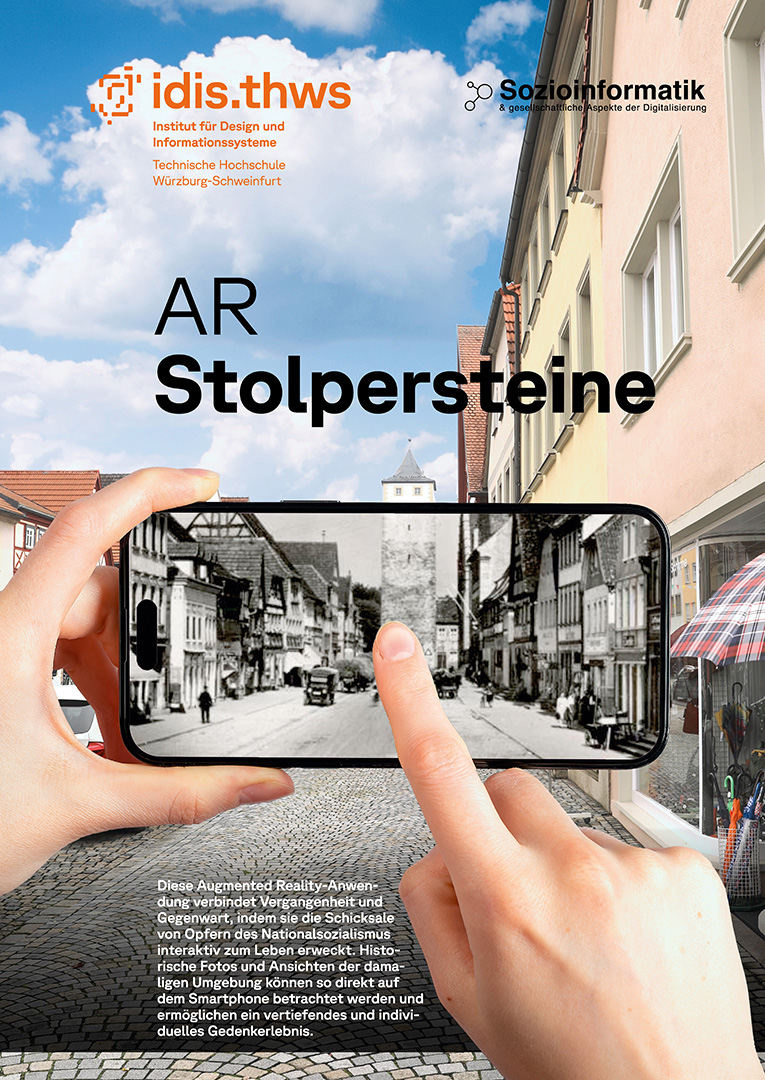
We are developing an augmented reality application to strengthen cultural memory and historical awareness in urban spaces. Our app takes users on a virtual journey through the life stories of people commemorated by Stolpersteine in German and European cities. These brass plaques embedded in the sidewalk serve as a memorial to the fates of victims of National Socialism. The app allows users to view the Stolpersteine on their smartphones while accessing photos and historical images of the respective locations. The overarching goal of our project is to create a connection between the past and the present while simultaneously raising awareness of the significance of the Stolpersteine as the world’s largest decentralized memorial. Through the use of AR technology, the significance of these memorials is not only preserved but also enhanced by offering an interactive and immersive experience that deepens and personalizes the remembrance of the victims of the Holocaust.
AR Simulation of Schizophrenia Symptoms
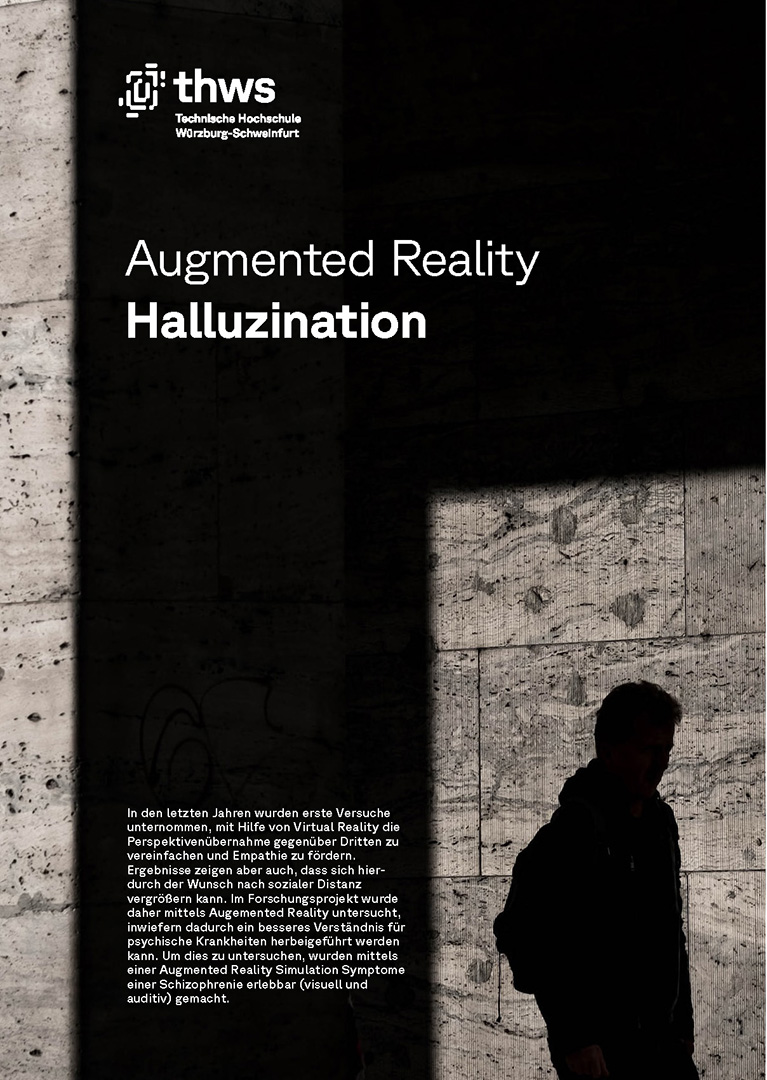
Eva-Maria Weiß’s ReSy research project is investigating the potential of augmented reality (AR) to reduce stigma toward people with mental illness. To this end, both healthcare professionals and laypeople will experience symptoms in an AR environment. With Emma Schüpfer’s support in developing the HoloLens application, the symptoms of mental illness are made tangible, and their impact on the social environment is highlighted. The goal is to foster understanding and empathy toward those affected through immersive AR experiences.
Current Doctoral Projects
Motion Capture to Support Movement Sequences
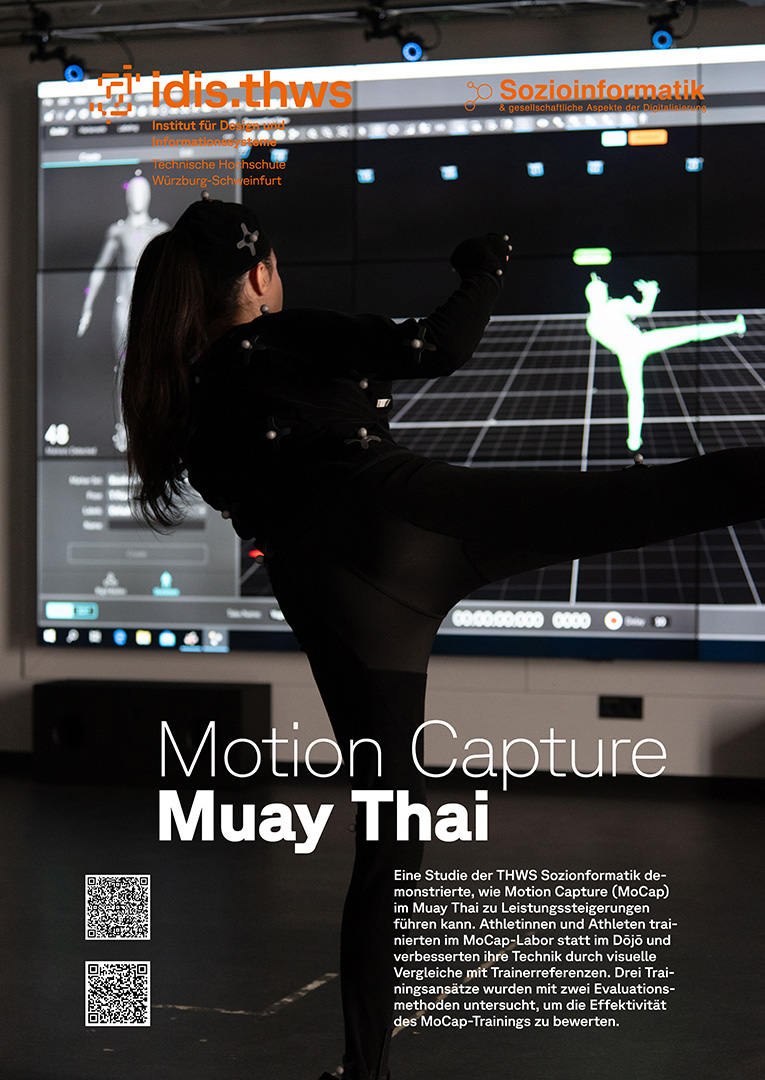
Using kinematic motion analysis via motion capture, Leonie Laskowitz analyzed and optimized training for beginners in the martial art of Muay Thai. Traditionally, movement sequences in training are guided and evaluated by a coach. However, in cooperation with the university, the athletes did not train in a dojo but rather in the motion capture lab on Sanderheinrichsleitenweg. This allowed for very detailed adjustments to the movement sequences and enabled potential sources of error to be corrected early on. In the next step, she will now also apply this technology in the fields of ballet, physical therapy, and yoga.
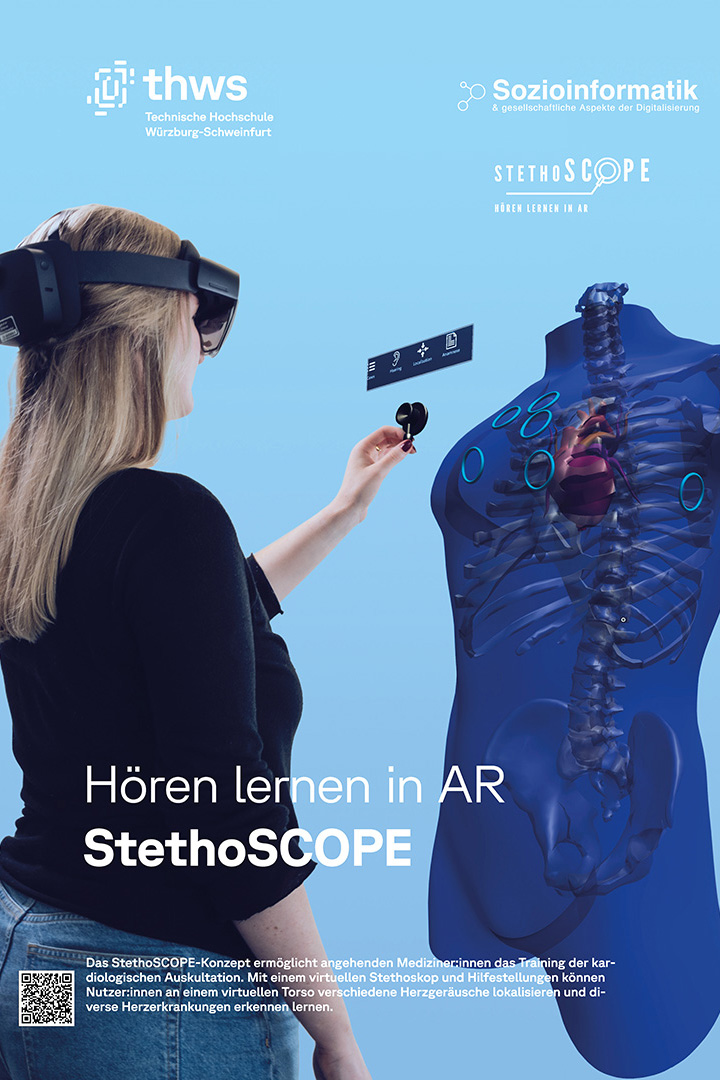
AR Auscultation Training – StethoSCOPE
Auscultation (listening with a stethoscope) is a non-invasive procedure and an important part of the medical history. Auscultation can be used to detect various diseases and abnormalities of the heart, lungs, intestines, and blood vessels. Susanna Götz is now improving medical training in the auscultation of, for example, heart, digestive, and lung sounds. Her augmented reality application offers medical students the opportunity to specifically train their skills in listening to and interpreting bodily sounds. StethoSCOPE provides an interactive, practice-oriented learning environment that compensates for a lack of individual practice time. This significantly improves the quality of training in this crucial area of medicine.
Pop-up Education: Social Engineering and Security Awareness – The Wolf in Sheep’s Clothing
A lack of knowledge about fundamental, socially relevant IT topics can lead to disadvantages, particularly in the workplace. A lack of knowledge can lead to exclusion and increased vulnerability to cybercrime. For this reason, it is important to educate both employees and society at large about key IT topics. To this end, Lisa Keller examines the extent to which the “pop-up” concept—familiar from the retail sector—can be successfully applied to IT education, both in public spaces and in the workplace.
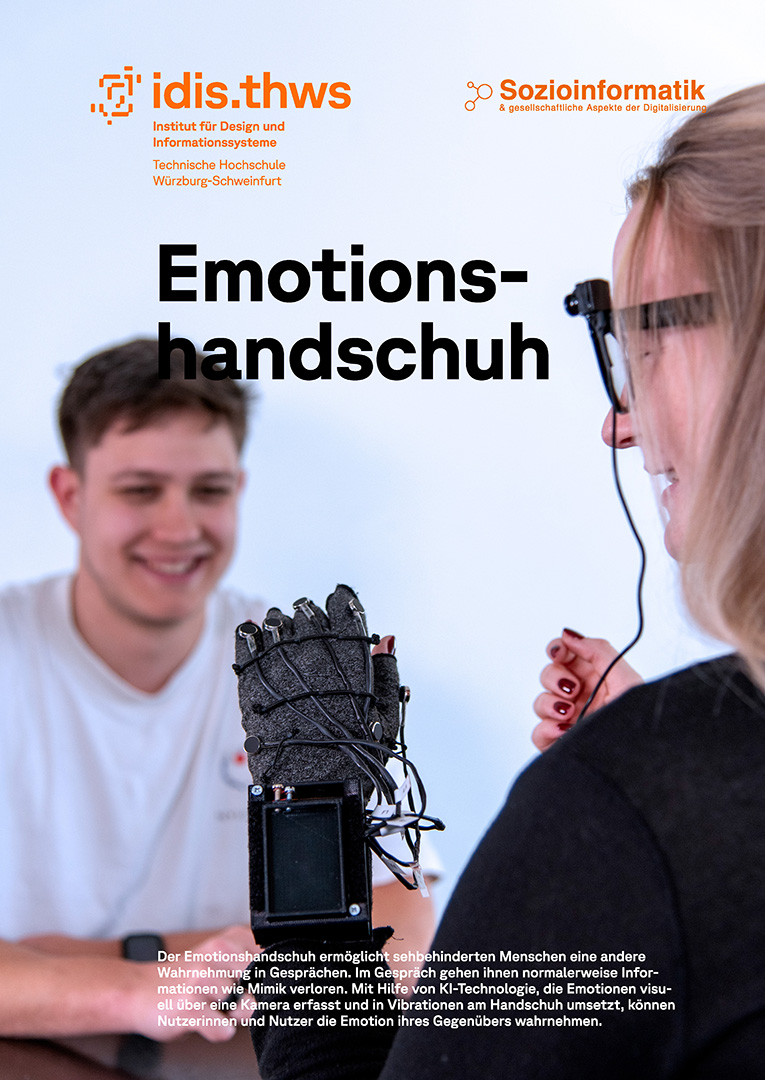
The Emotion Glove
The nonverbal recognition of emotions in social interactions poses a particular challenge for people with impaired emotional recognition or visual impairments. Against this backdrop, the Chair of Socioinformatics has developed a prototype emotion glove that uses vibration actuators to discreetly signal emotions recognized via the Facial Action Coding System. Marie Herz will continue to develop this prototype over the next three years and evaluate its functionality in everyday life.
Publications/Exhibitions
See “Publications” for an overview: https://fiw.thws.de/fakultaet/personen/person/prof-dr-habil-nicholas-mueller/