Wild Gardens
Why they are so important right now
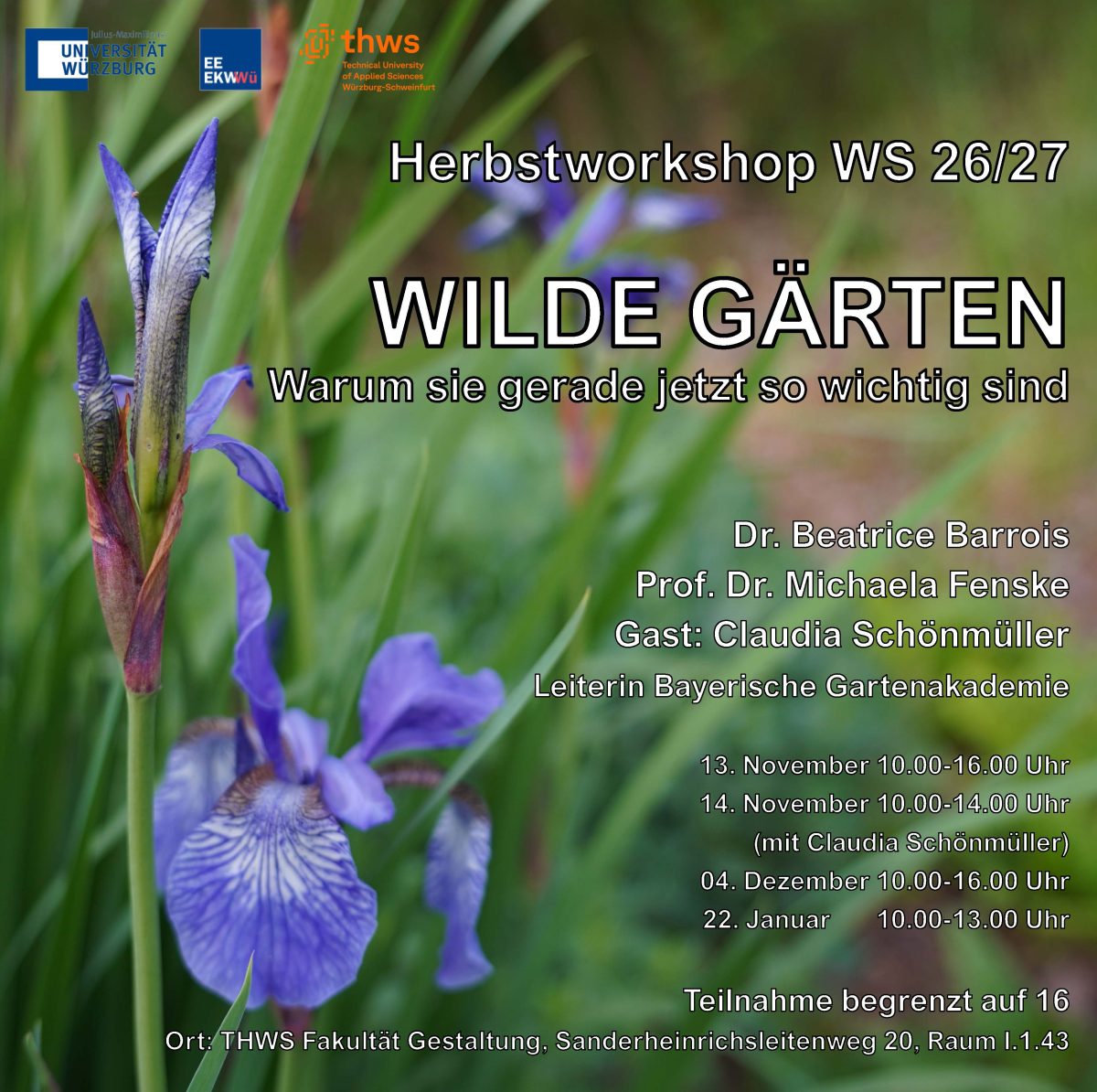
Gardens are central spaces in everyday life. This is where people, plants, animals, and other living beings come together. Amid climate change, species extinction, and other effects of the socio-ecological crisis, gardens are currently gaining increasing importance as habitats. Here, people are exploring new ways of coexisting with other living beings. More and more gardeners are encouraging wild elements in their gardens: wild plants and animals are welcome as fellow inhabitants. Benjes hedges and so-called “wild corners” are becoming design elements in home and community gardens. At the same time, green lawns are giving way to colorful meadows or perennial beds. Dead trees that pose no danger to life or limb when they fall serve as habitats for woodpeckers, bats, and insects. Those who garden in this way are also championing new orders, ethics, and aesthetics of coexistence between humans and other living beings. This year’s fall workshop explores the newfound love for the wild in our gardens. Claudia Schönmüller, director of the Bavarian Garden Academy, is our guest this year. She will discuss the meaning and purpose of the wild from a horticultural perspective, with a special focus on wild plants in the garden.
The goal of the workshop is to expand our series “Telling Stories of the Anthropocene” {https://www.phil.uniwuerzburg.de/eevk/forschung-projekte/multispecies-conference/anthropozaen-erzaehlen/) with new stories about the wild in Germany’s gardens. Registration/Information: michaela.fenske@uni-wuerzburg.de or beatrice.barrois@thws.de
Fri, Nov. 13, 2026, 10:00 a.m.–4:00 p.m.
Sat, Nov. 14, 2026, 10:00 a.m.–2:00 p.m.
Fri, Dec. 4, 2026, 10:00 a.m.–4:00 p.m.
Fri, Jan. 22, 2027, 10:00 a.m.–1:00 p.m.