Design4Fun
movement, light, sound, object
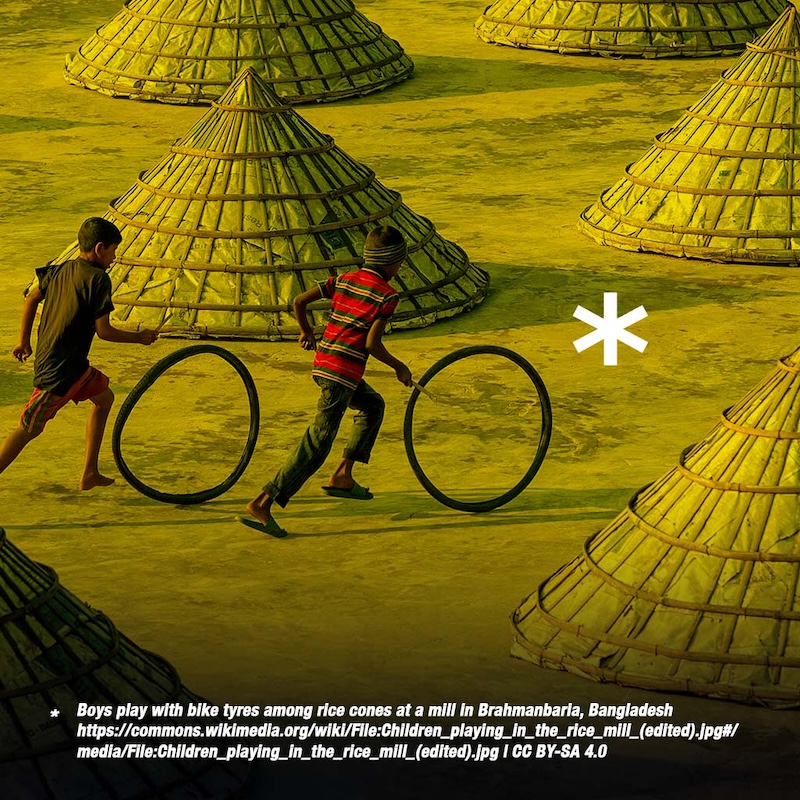
»Play is a voluntary act or activity which (…) has its purpose in itself and is accompanied by a sense of excitement and joy, and an awareness of being “different” from “ordinary life”.«— Johan Huizinga, Homo Ludens
Swing. Swing. Stick. Turn. Drum. Press. Push. Fall. Laugh. Play.
Object + imagination = toy. [1]
Toys have a long history. As far back as over 42,000 years ago, people were crafting small carved objects, such as the ‘Lion Man’ from the Hohlenstein-Stadel, out of mammoth ivory. These are considered to be some of the earliest relics of playfulness. [2]
But it’s not only children who enjoy playing. Playfulness is a personality trait that enables adults to perceive practically any situation in daily life as amusing, intellectually stimulating and/or interesting, and to shape or reshape it accordingly. [3]
According to the play theorist, Bernard Sutton-Smith, play is the central ‘mediator of the new’ and the fundamental source of creativity and innovation. He challenges the traditional view that play merely imitates or practises existing skills. Play deliberately generates chaos, variations, and new behaviours that greatly increase a person’s creative potential. [4]
In this introductory course, we will explore the worlds of play and imagination. Step by step. We will take a hands-on approach, from the playful exploration of an idea to the finished design. Our goal is to create interactive, kinetic, singing and resonant artefacts that sit somewhere between sculpture, installation and performative systems (play/witness) and that fascinate participants by inviting them to touch, explore and listen.
No prior knowledge of three-dimensional design is necessary. As always, you are free to choose your own media. However, the course will teach you how to develop and communicate design solutions using various digital and analogue prototyping techniques. You may also choose to explore aspects of manufacturing, usability or the life cycles of products, but this is not required.
Participation in the TP en miniature course is recommended.
I will be available to answer any questions about the course online via my Zoom on Tuesday, 22 September 2026 between 4:00 pm and 5:00 pm.
—